Launching the new flagship product bundle for Alaska’s biggest telecom company

Client - GCI
GCI is Alaska’s #1 internet provider with their sights on capturing the mobile market. GCI+, their flagship product, was launched to help them achieve that by offering a bundled service of internet, mobile and TV at a reduced price.
Partnering with my team at Horizontal, I was tasked with crafting the digital experience that would launch this product on their website, including designing its e-commerce experience.
My role
Strategy - Involved in early stages of GCI+ digital product launch strategy conversations
UX - Wireframing, user flows, interaction design, prototyping
Testing - A/B testing
Deliverables
User flows
Wireframes
Research findings and recommendations report
Tools
Figma
InVision
Whimsical (user flows)
Methodologies
Secondary research
Interactive prototyping
User testing (A/B testing)
Project Overview
The Challenge:
Introduce GCI+, the new flagship product of GCI which combines internet, mobile, and TV services, on their digital platform and construct an accompanying e-commerce experience using a limited development budget.
The true challenge here was taking a complicated product with many customizations, and designing an experience around it that was simple to understand and use.
High-level goals:
Design a landing page that tells a cohesive and digestible story about a complicated and dynamic product.
Architect a buy flow that combines 3 different services as well as a device shopping experience
Leverage existing components to create an elevated experience that remains cohesive with the rest of their site and brand
Research + Discovery
After many discussions with the client and reviewing the project brief and business objectives, we took a look at the market to see how others were designing personalized product shopping experiences.
We looked at GCI’s direct competitors, other telecoms, as well as outside-of-the-market approaches to customized product building and bundling.
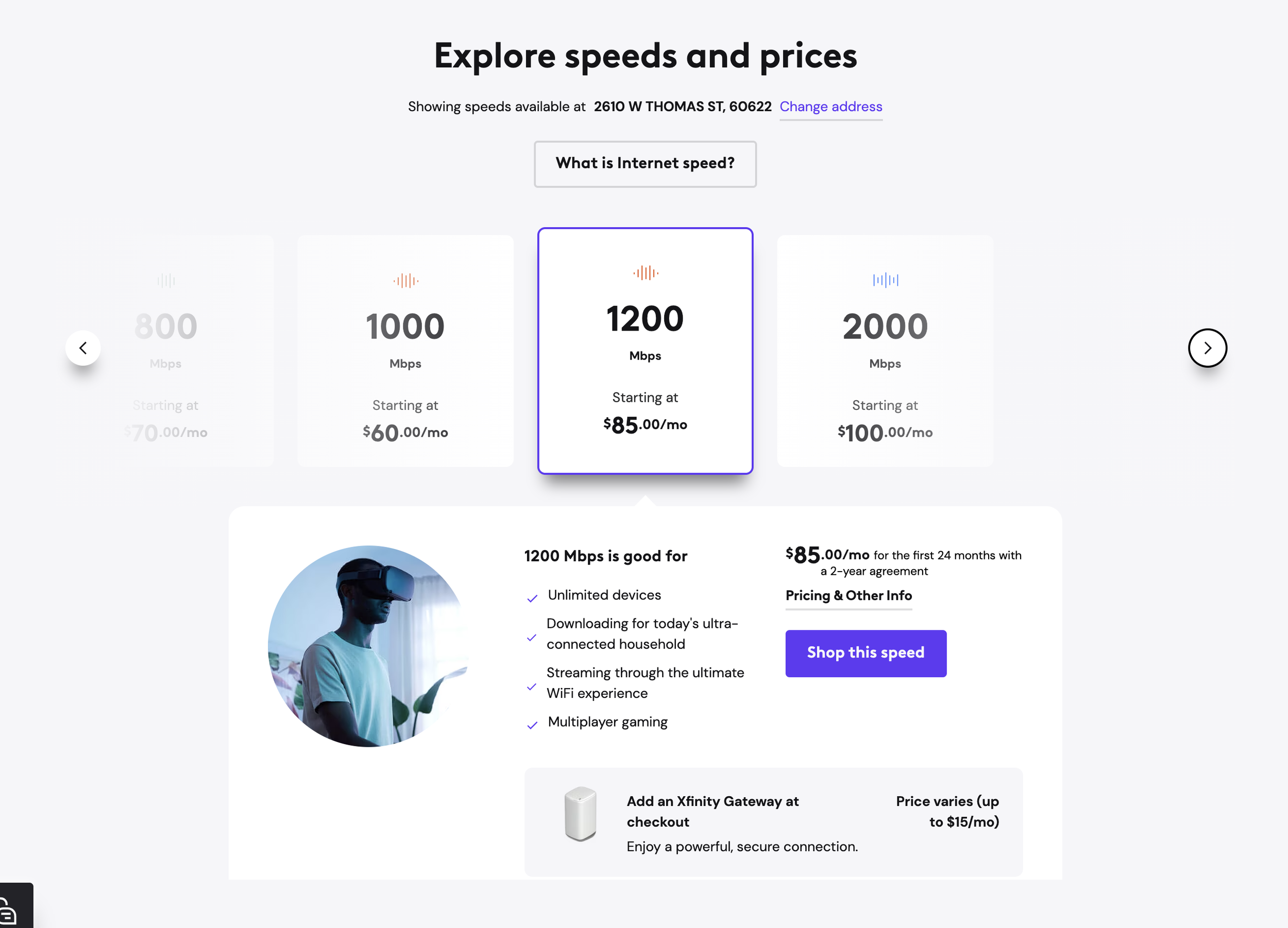
Within the telecom category, I was inspired by Xfinity’s approach of creating personas for each of their internet speed options as a way to help the user find their best fitting plan.
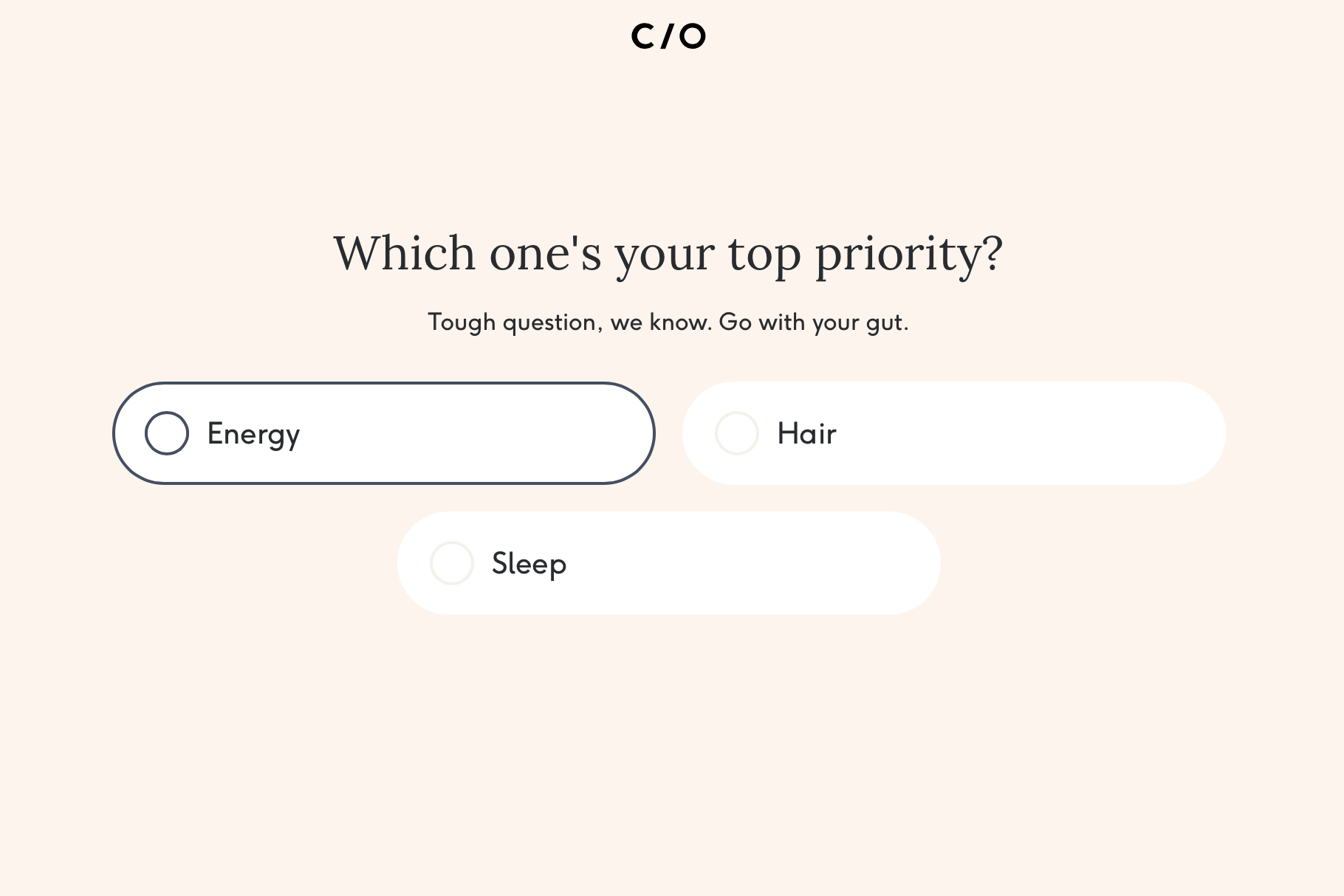
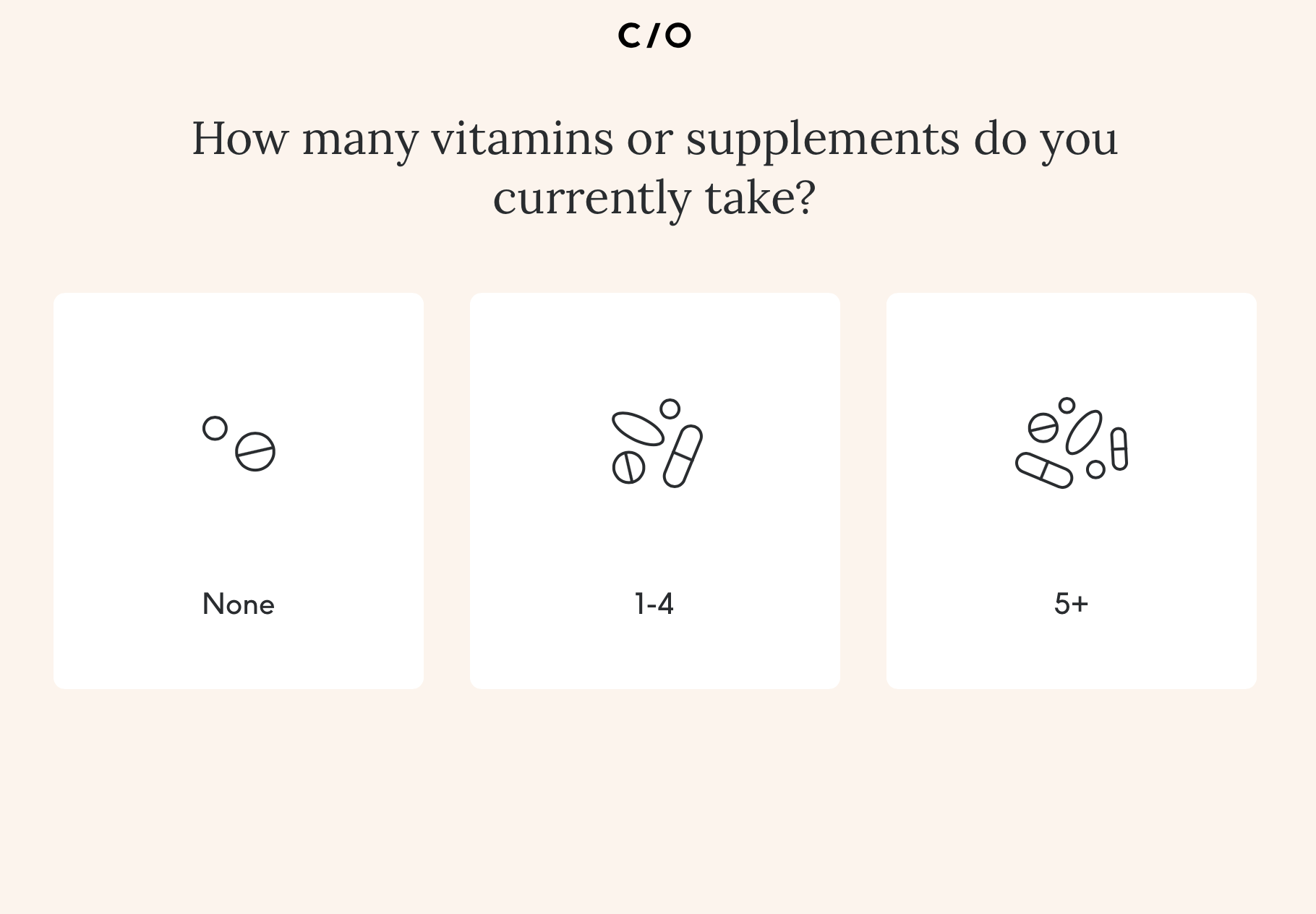
I took a lot of inspiration from outside of the telecom category as well. I found more built-out experiences that helped the user choose a plan that works best for them, and made it fun in the process.
care/of helps you create a customized vitamin and supplement packet through a quiz like experience that collects information on you and your health goals
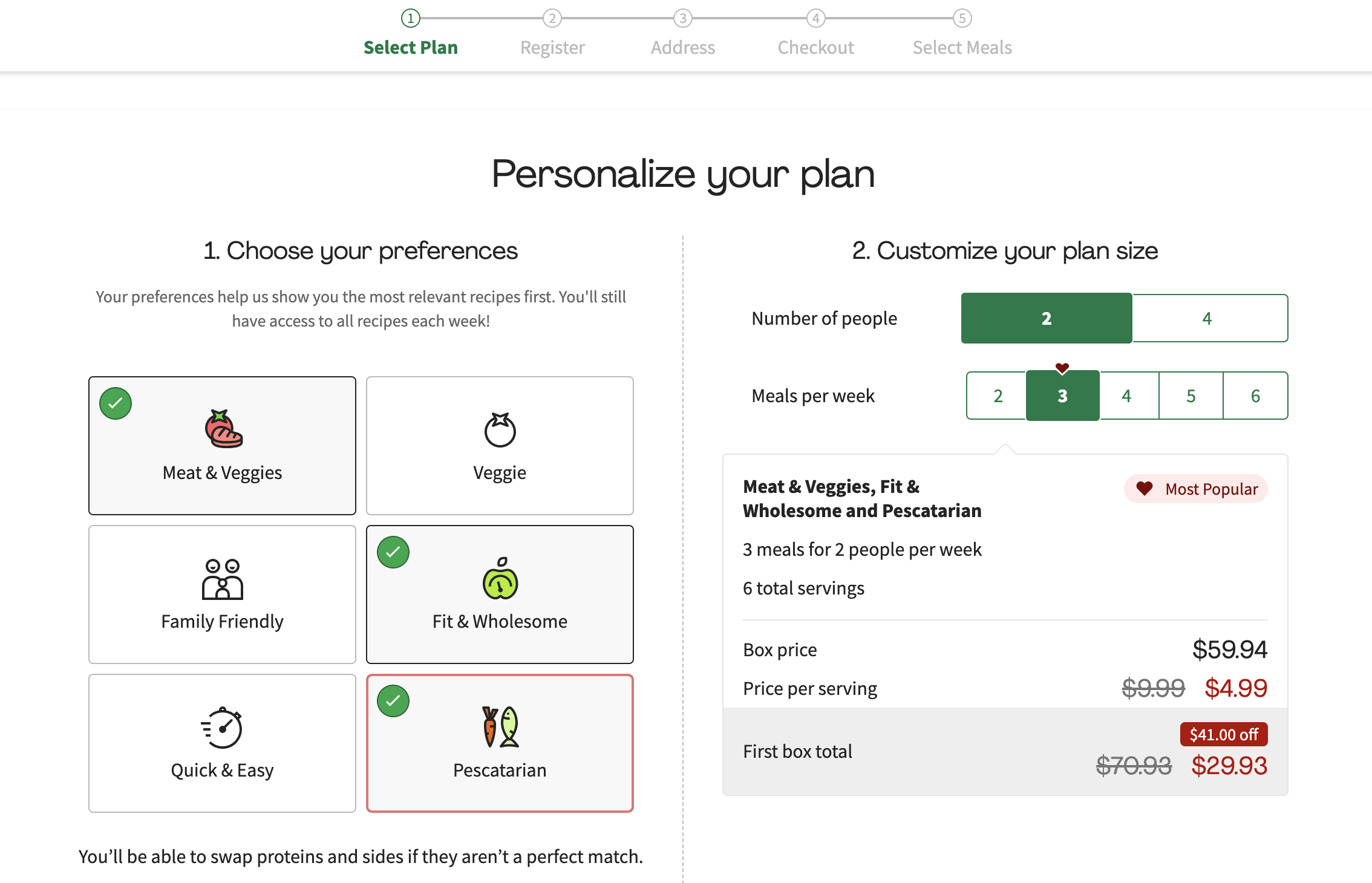
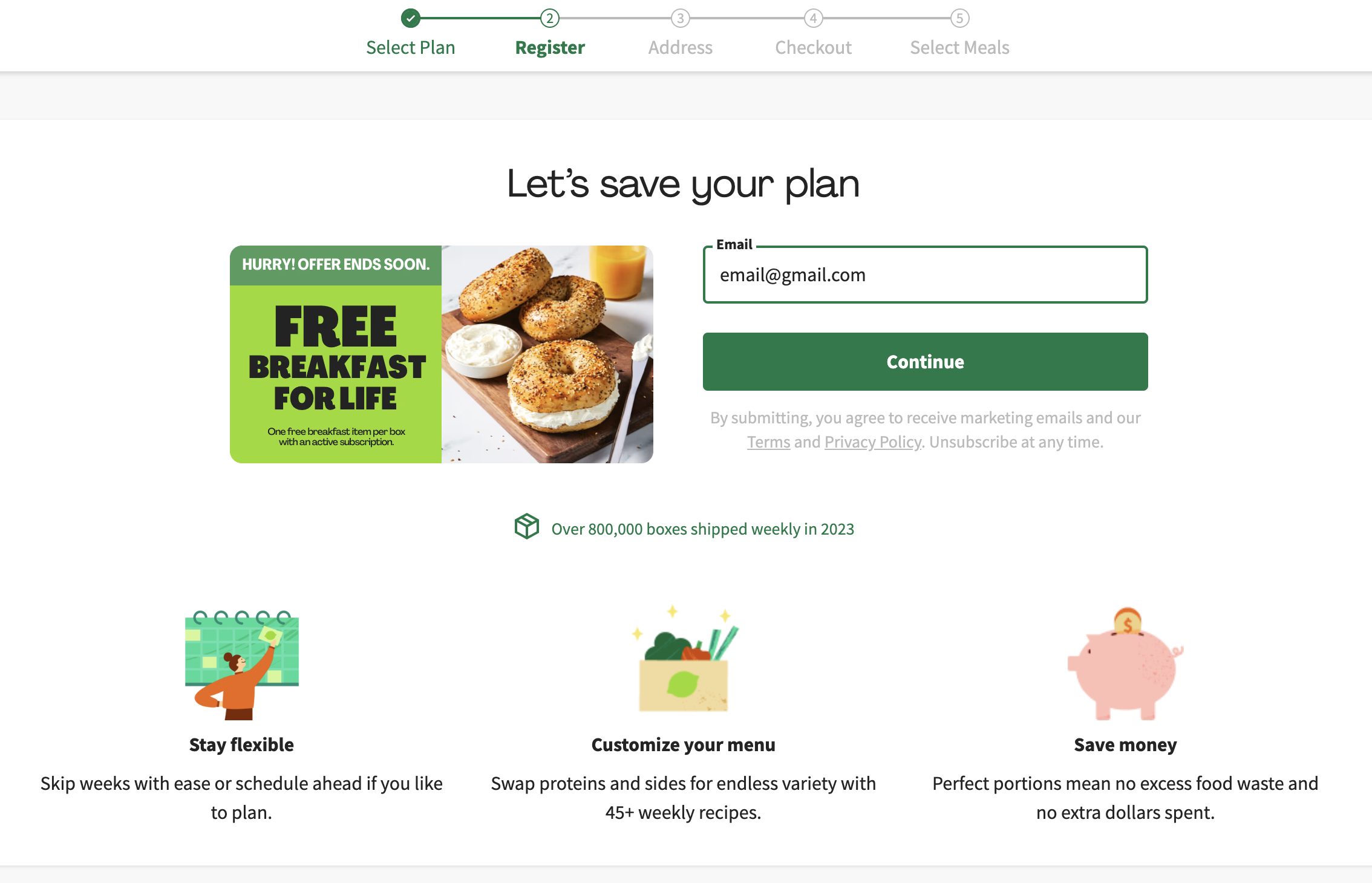
Hello Fresh is a much more to-the-point experience but still manages to bring some customization and delight to the experience of building a meal plan.
Thinking big
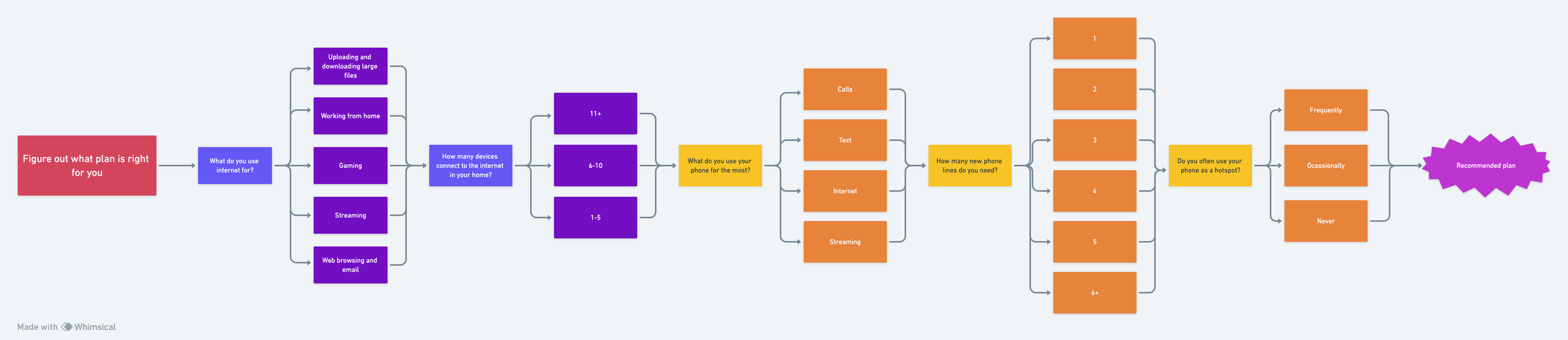
Inspired by what I saw both in and out of the telecom category, I wanted to create a guided experience that would help the user find what plan best fit their needs by answering a series of questions about their tech lifestyle. I thought this would be an elegant solution to help users navigate the complicated product bundle by taking away some of the guesswork and mental load. This experience didn’t end up being in the budget for MVP launch, but it became an aspirational experience that was eventually achieved down the line.
Crafting the experience
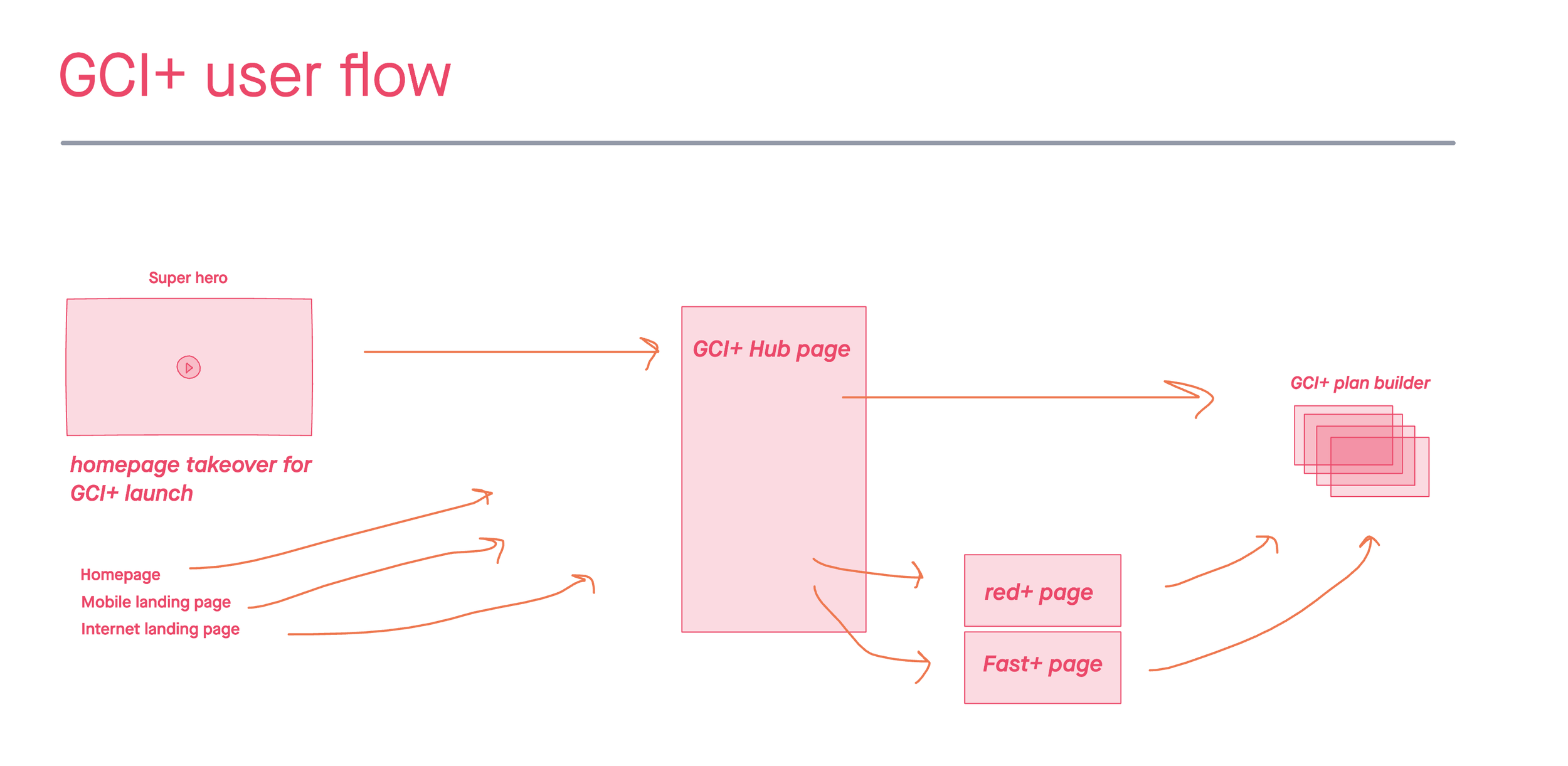
I started to architect the experience at a high level by creating a user flow in InVision Freehand that indicated the different paths the user could take, starting with promotional drivers to the GCI+ landing page, and leading the user all the way through the product plan builder experience.
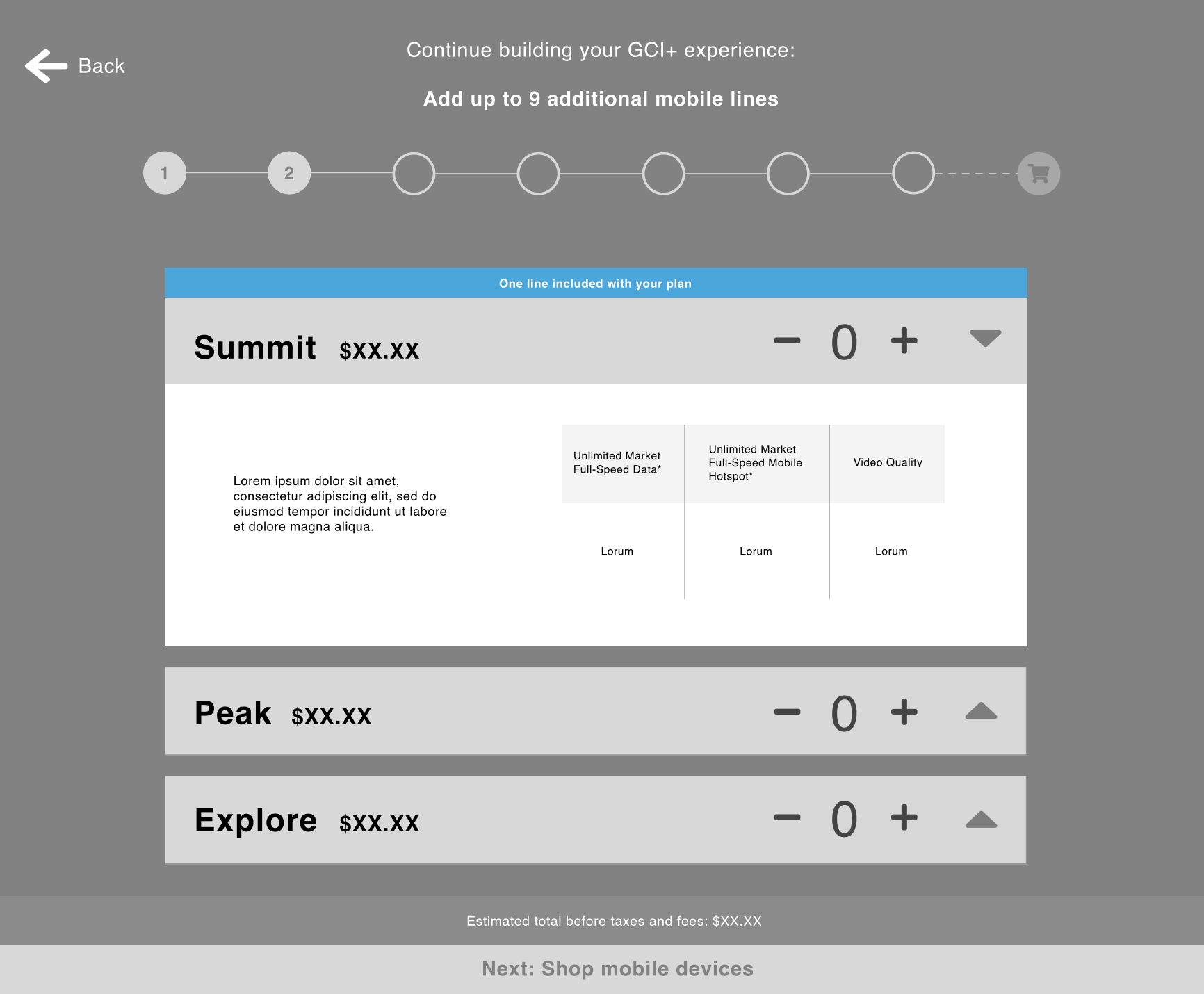
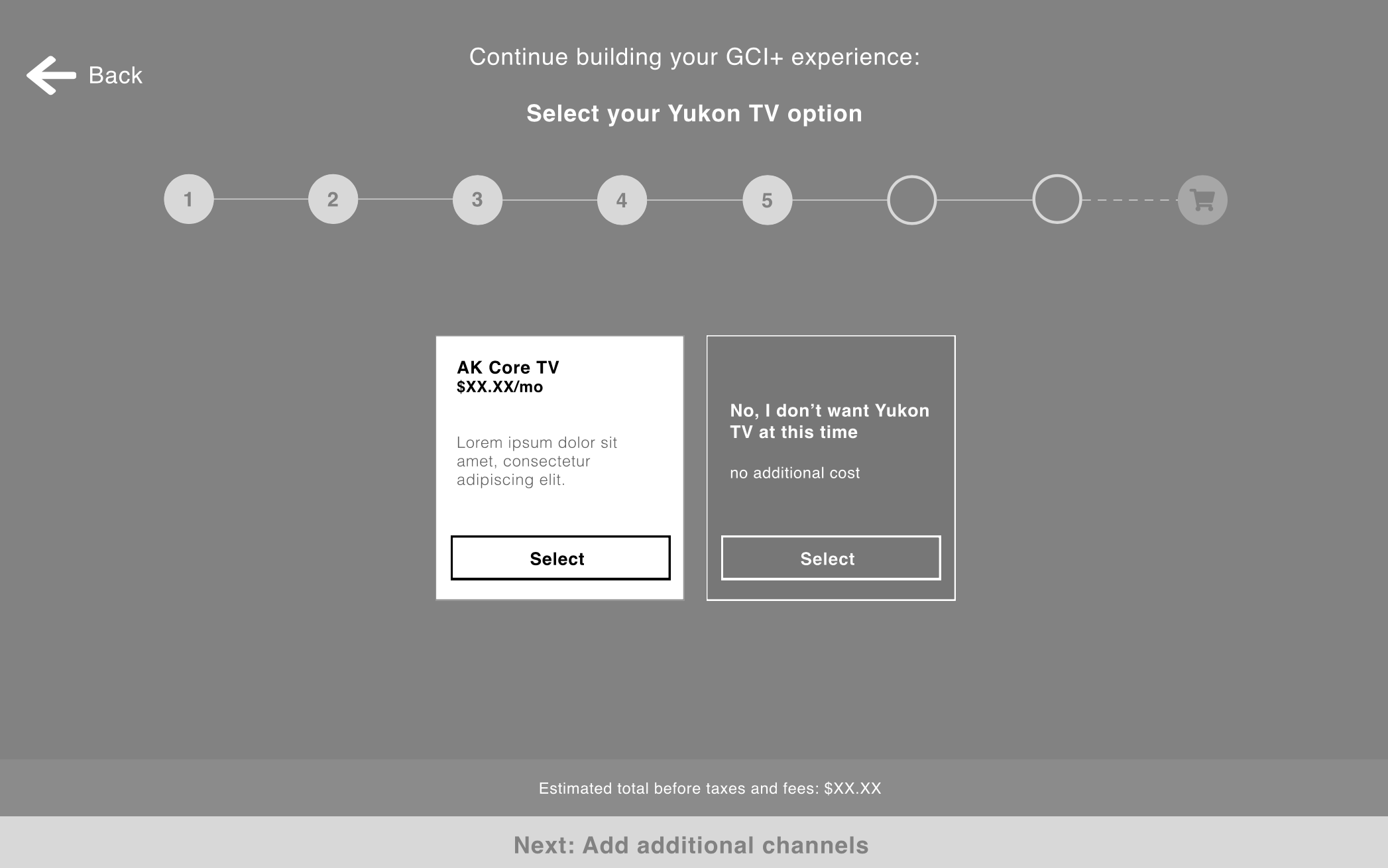
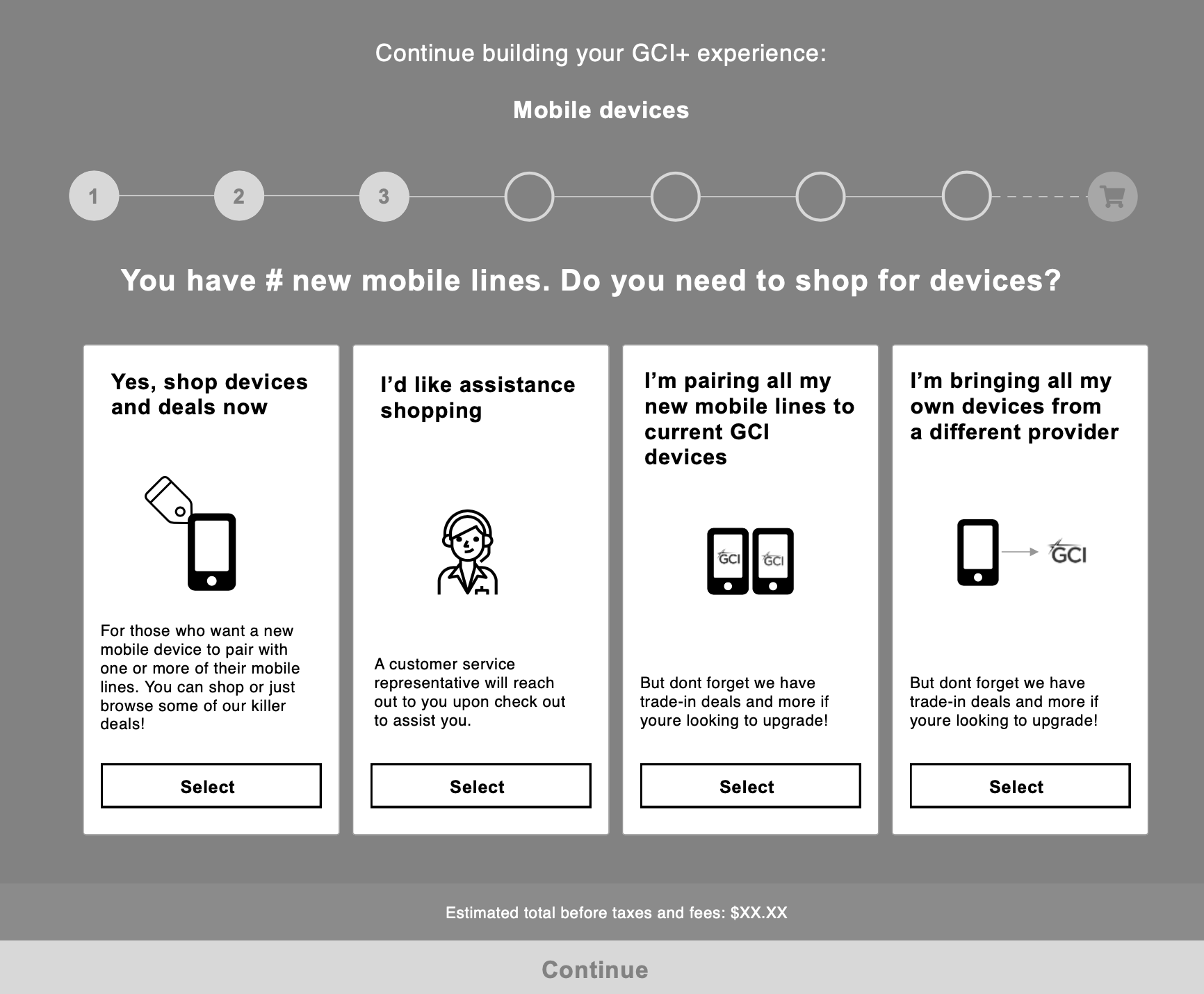
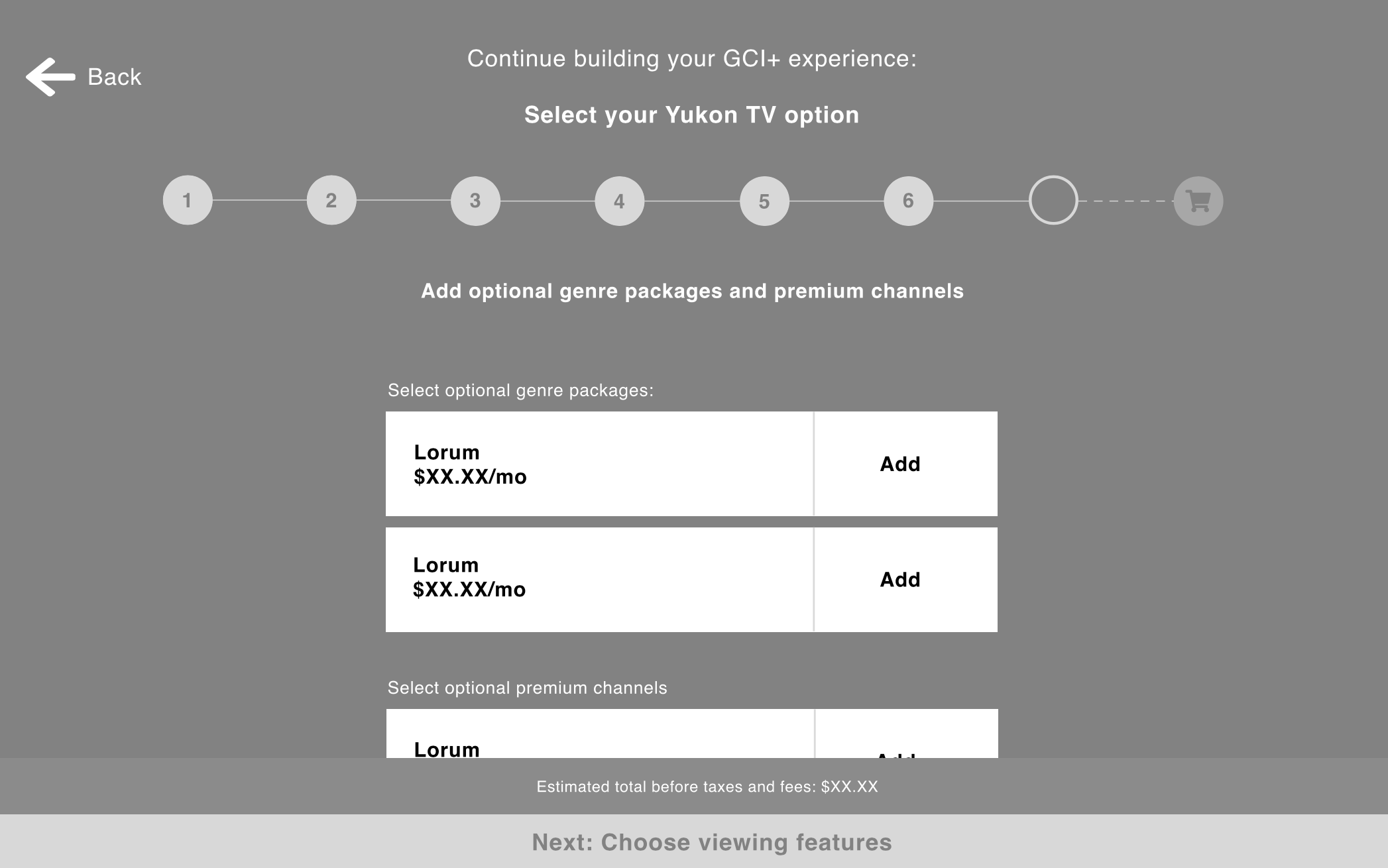
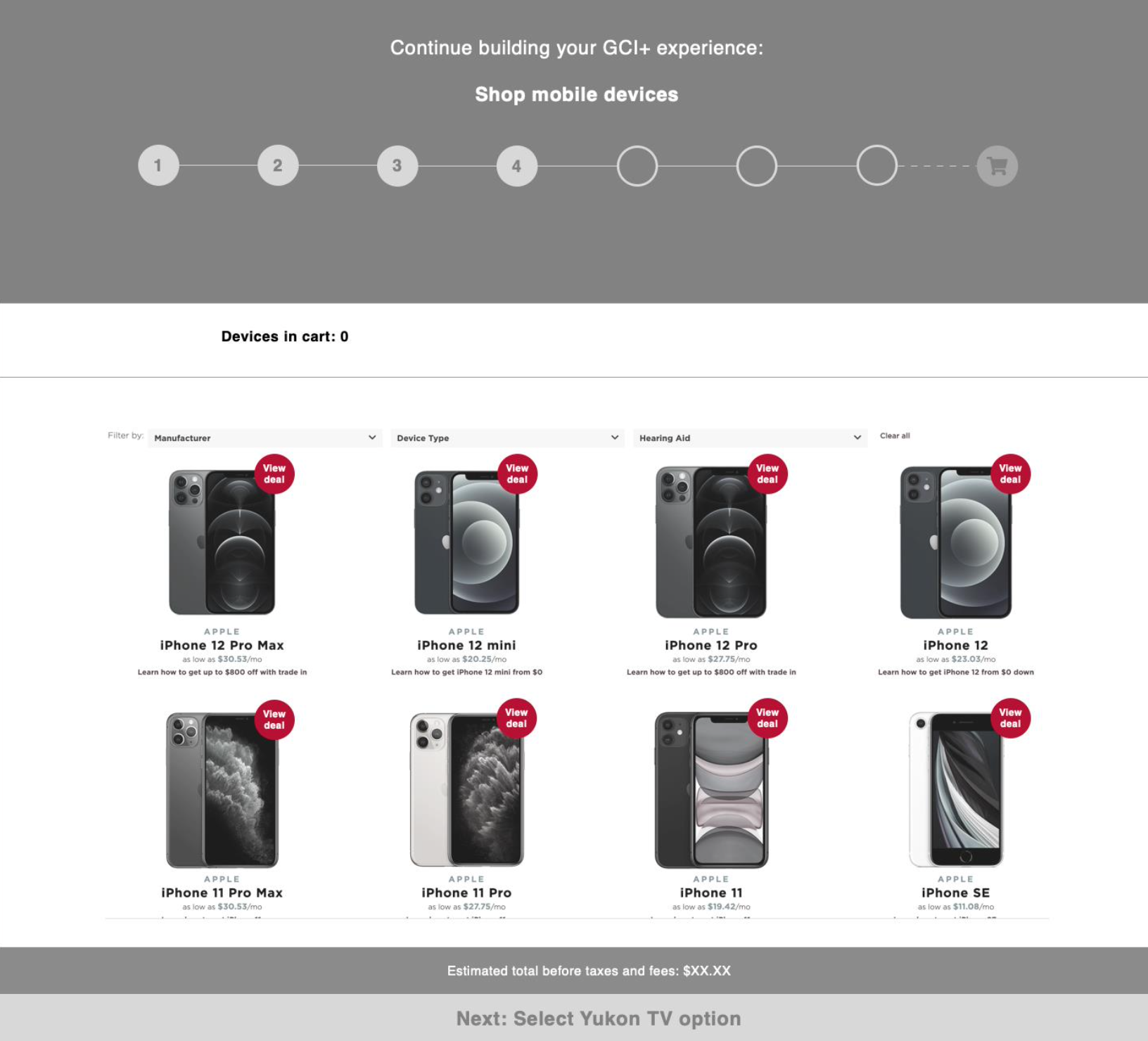
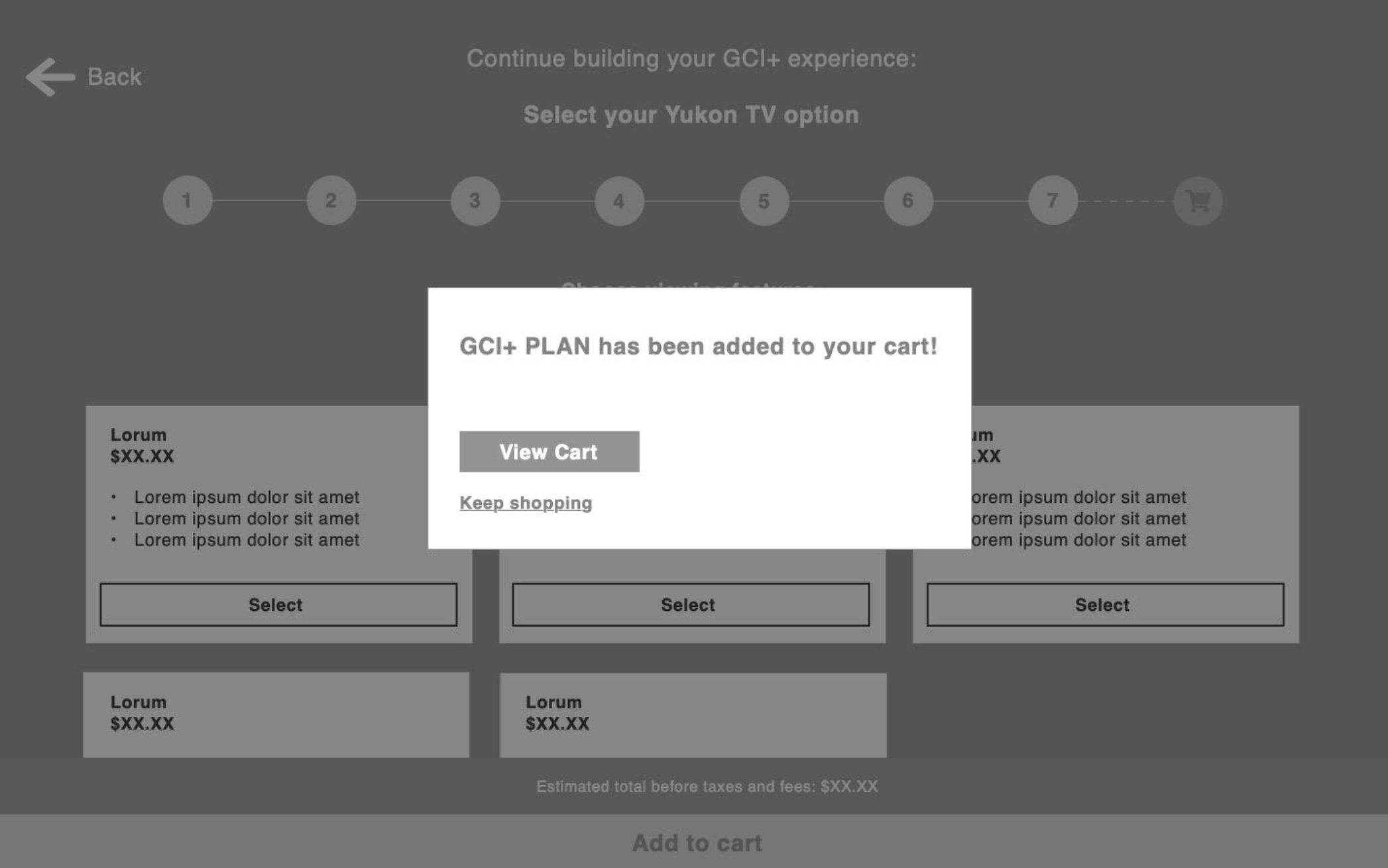
For MVP launch, the biggest task was creating the plan builder experience. It was tricky because of the product complexity and limitations, as well as the requirement of being able to shop for mobile devices while keeping the user in the plan builder experience.
My strategy was to give users the ability to bypass information and steps in order to help them discover and purchase plans, illustrated in the user flow below

Then, I created wireframes for both the GCI+ product landing pages as well as the product buy flow experience.
The ecomm experience was particularly tricky because of the product complexity as well as the requirement of being able to shop for mobile devices within the experience.
GCI+ landing page
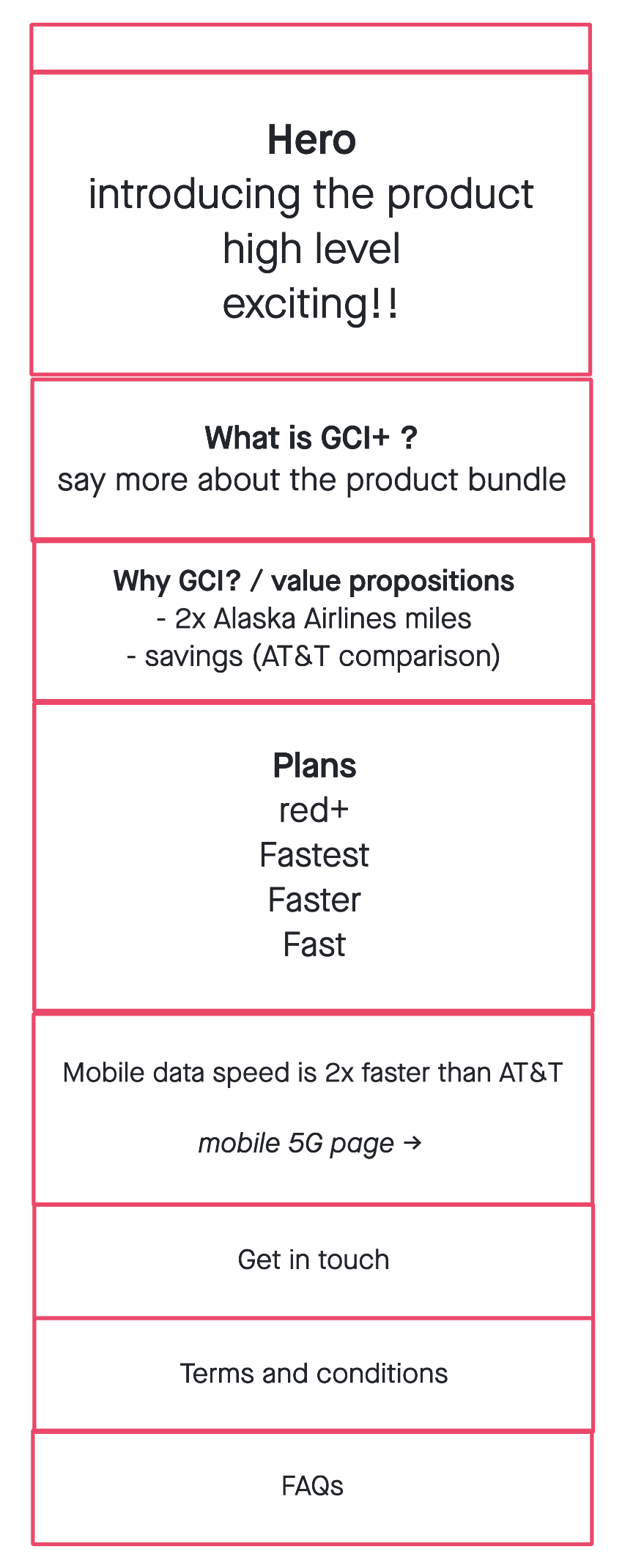
Page hierarchy
Before making wireframes or thinking about components, I met with the creative and strategy team to collaborate on a overall content hierarchy of the GCI+ product landing
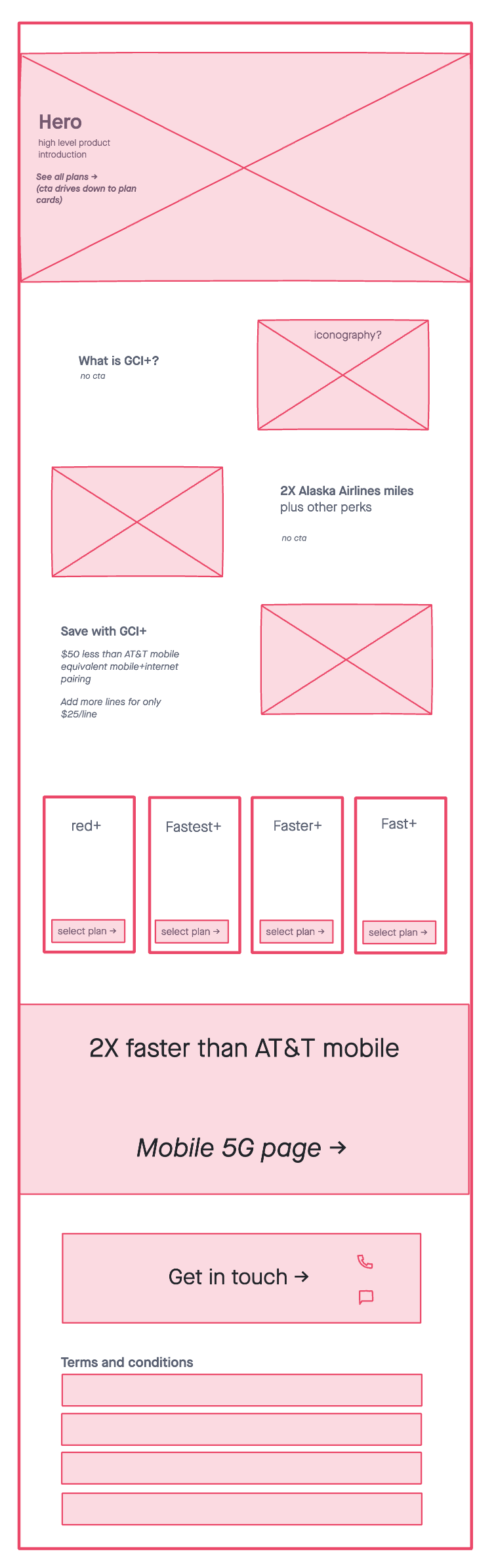
Mid-fidelity Wireframe
With a team consensus on what took priority content-wise, I then began to construct a low-fidelity wireframe of the types of components I recommended we use to tell the story we created
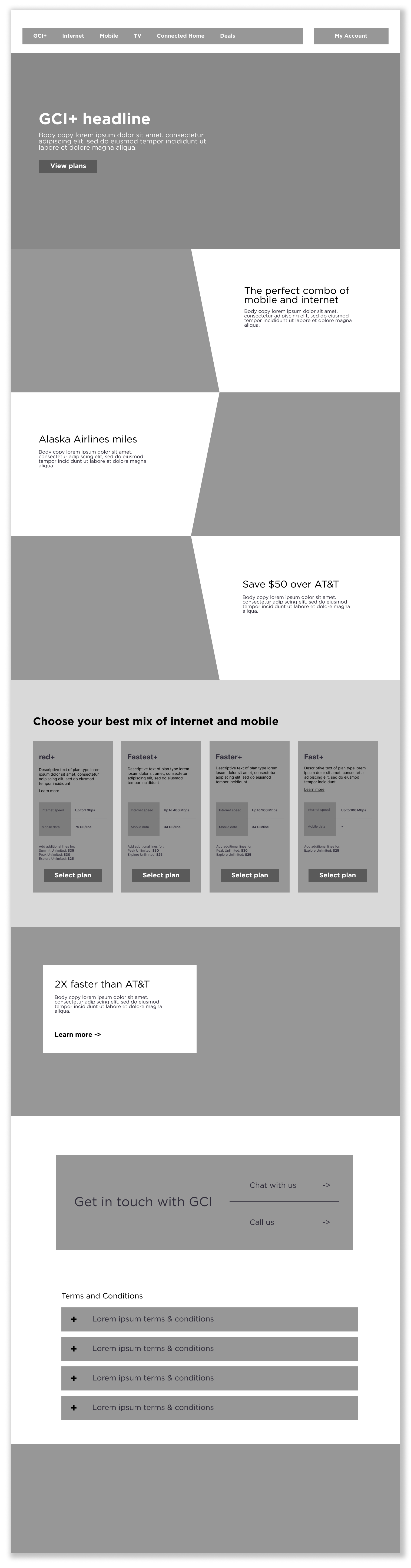
High-fidelity Wireframe
Now I began to construct the wireframe we would share with the client. I worked with a copywriter to include directional copy in the presented wireframes to help tell more of a story, which in turn gave the client something more concrete to react to and led to better feedback in the end.
Experience in design
Testing and improving
After the product had launched and the customer was more familiar with the GCI+ product, we started tracking the new experience in Google Analytics* and Content Square* to see how it was performing with users.
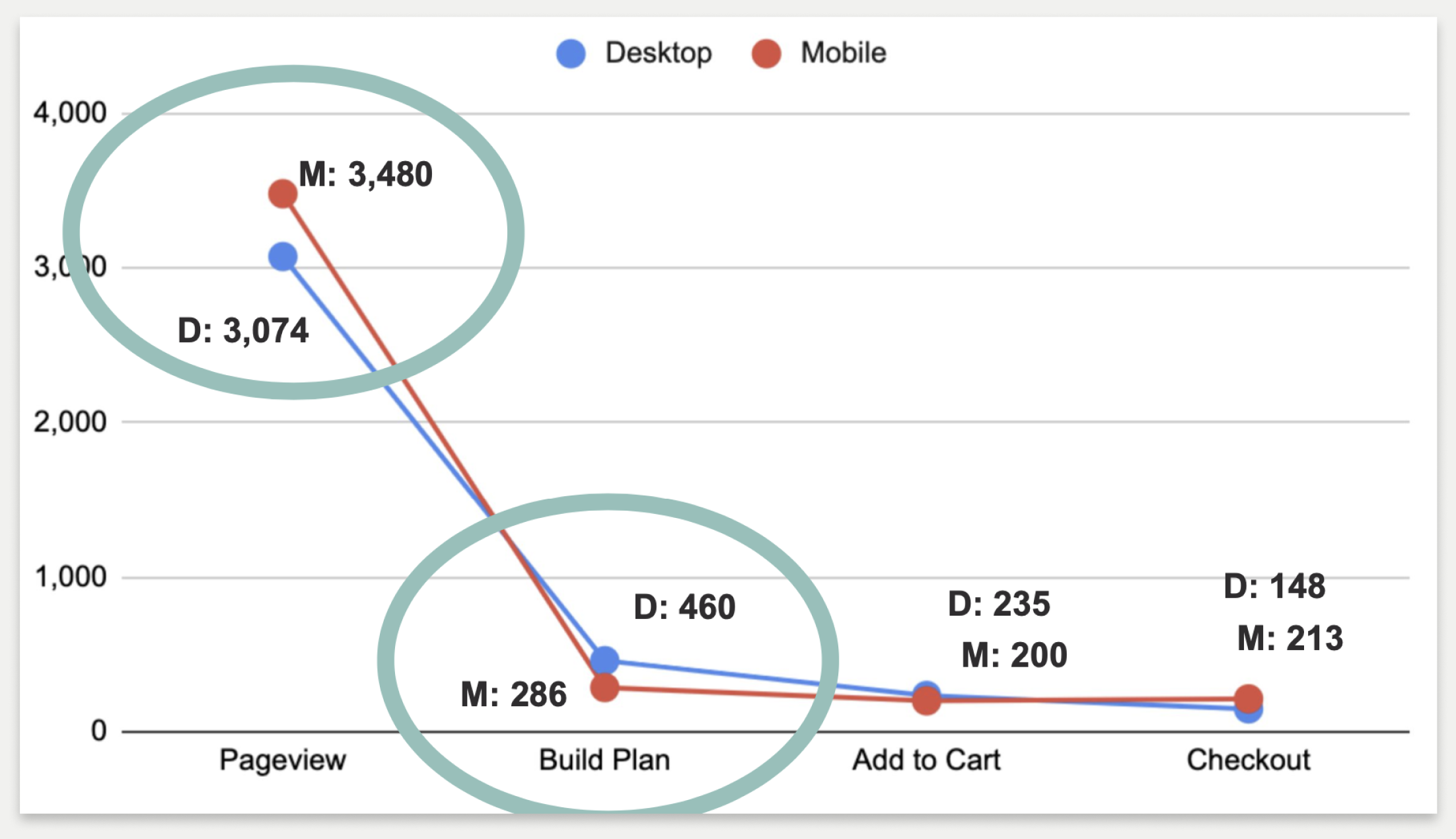
Graph depicting the click through from the GCI+ homepage into the plan builder experience and through to the checkout step
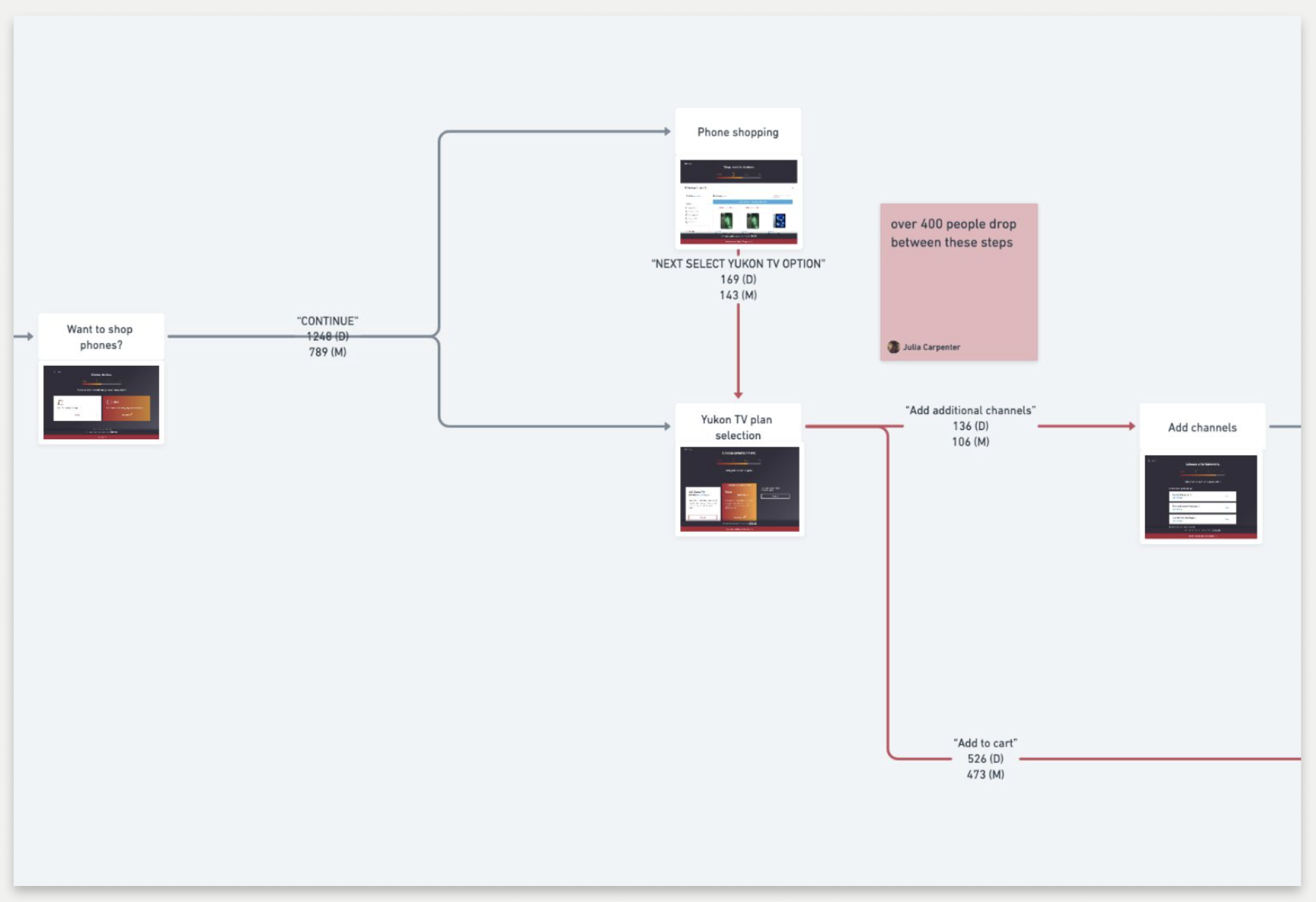
Journey map depicting the click-through rate within the different steps of the GCI+ plan builder
What I observed:
Customers were ready to shop and did not spend a lot of time lingering in the value proposition area of the page (which took up a lot of space)
There was a high click-through rate into the plan builder from the GCI+ landing page
Lots of users dropped out of the plan builder when asked if they wanted to add TV to their GCI+ bundle
Although overall conversion was high (5.5%, as compared to an industry standard of about 2%***), I could see opportunities to make it even better. Seeing as most users were not lingering long in the value proposition area, or skipping it altogether, I wanted to condense that area of the page so users could more quickly view the plans.
There was some differing opinions about where this value proposition area should ultimately live (above or below the plan cards). A lot of the GCI stakeholders wanted them to be as close to the top of the page as possible (below the hero) thinking that that would ultimately lead to the most conversion. However, my recommendation was to condense the value propositions but keep them above the plan cards so that the user could easily learn about why GCI+ was a compelling product before deciding to shop.
With dissenting opinions from the top, I proposed an A/B test to let the users speak for themselves. Whichever experience led to more conversion would be the one we would go with.
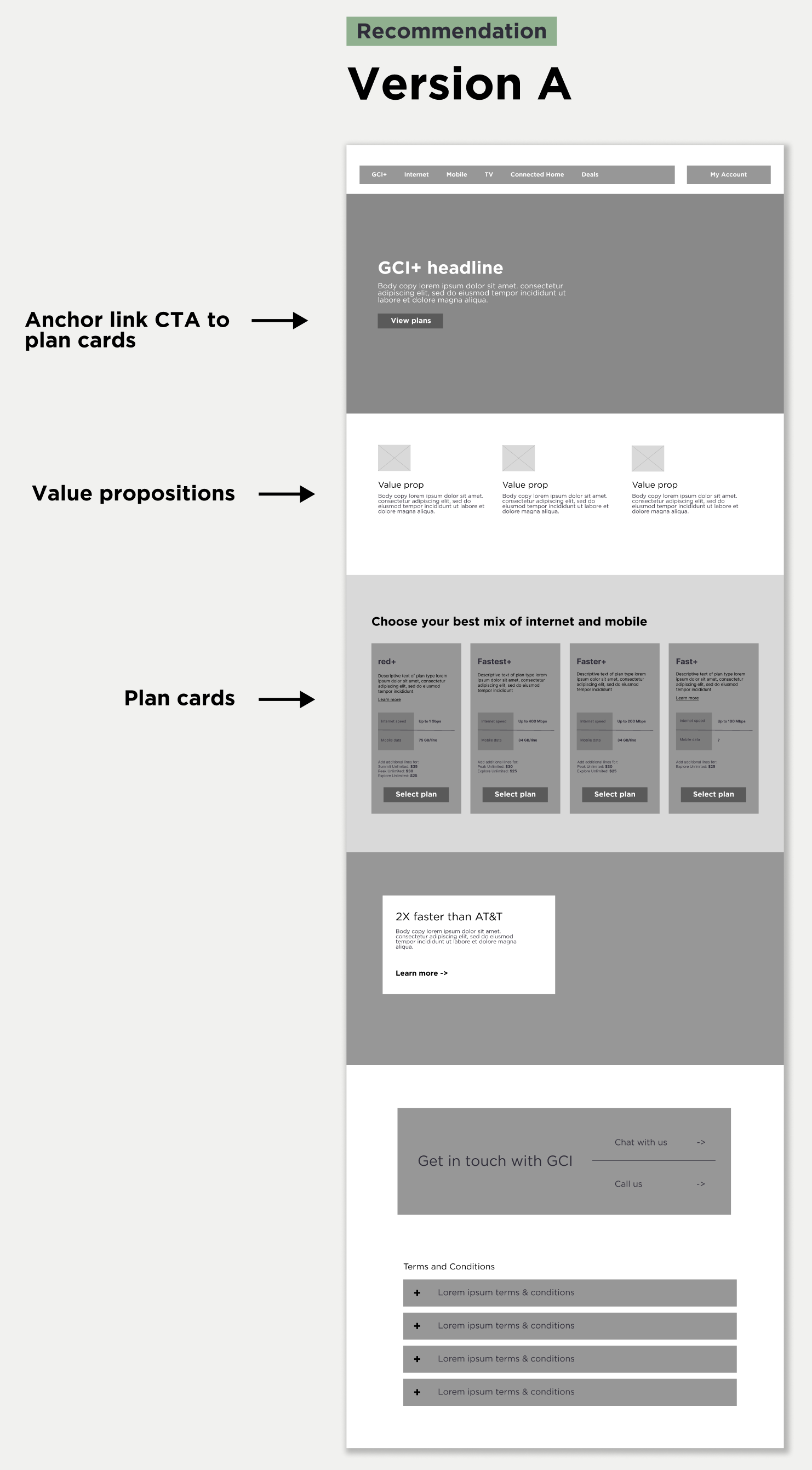
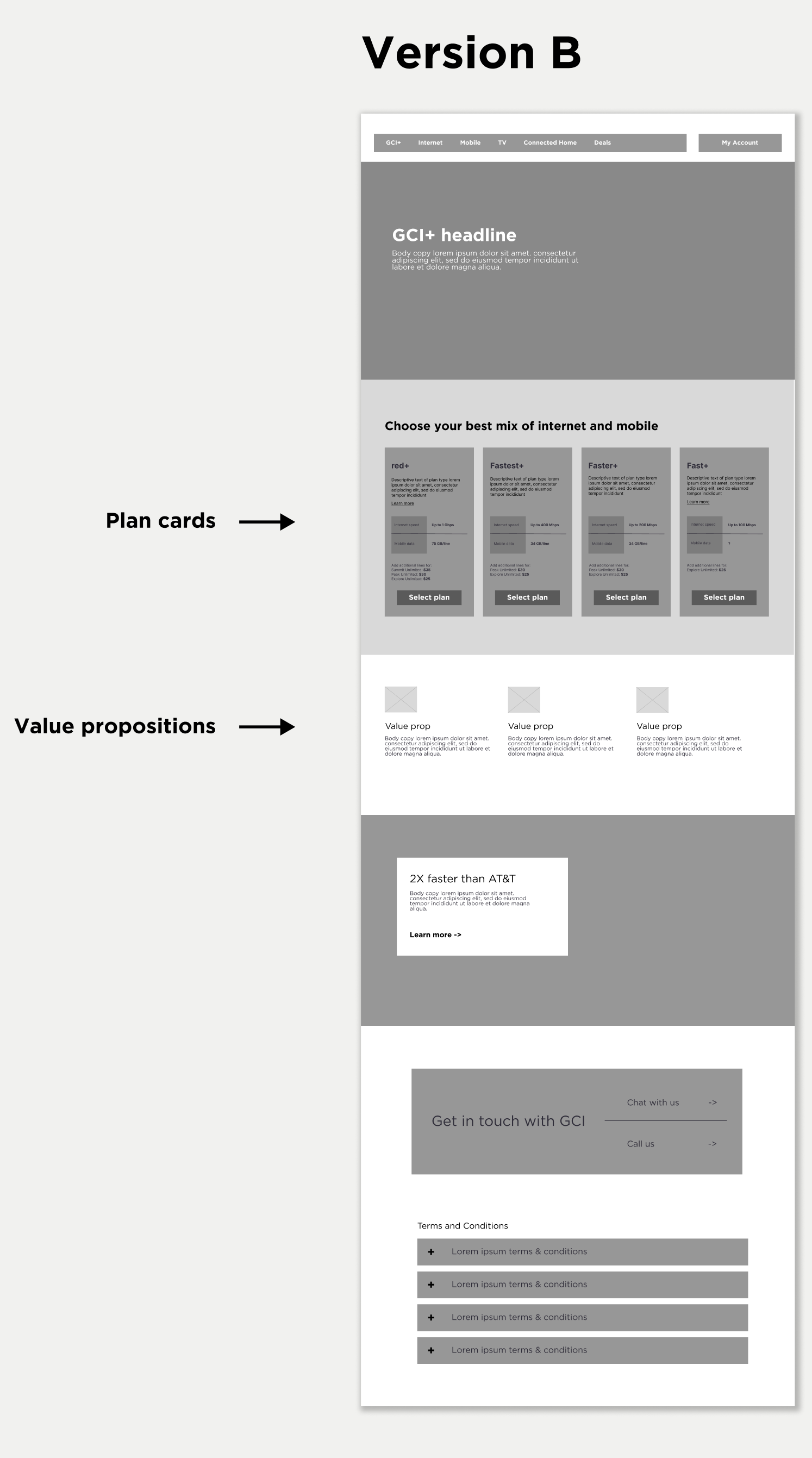
So, we ran an A/B test and found that condensing the educational content increased the click-through rate in either scenario, but conversion was ultimately better when the value propositions were placed above the plan cards.
In the end, we landed with a GCI+ landingn page experience that dramatically increased conversion on the page while contributing to a cleaner-looking and an easier-to-digest experience for the user.
In my time working for this client, the Horizontal team and I pushed hard for the integration of data analytics and testing to find ways to improve the site experience. With very little budget for user interviews, we found data analytics and A/B testing was the best way to make improvements to the site based on user insights and data.
*Content Square provided heat maps and attention maps to see where users were focusing their time when they were on the page and how far down the page they got before they moved on.
**Data analytics provided click through rated on page CTAs
*** https://vwo.com/blog/ecommerce-conversion-rate/#:~:text=eCommerce%20conversion%20rate%20statistics%20in%202021&text=The%20average%20conversion%20rate%20of%20Facebook%20ads%20is%20about%209.21,conversion%20rate%20of%20about%204.95%25